One of the world’s highly cited researchers!

My sister happened to notice that I was listed in the world’s 3,127 most highly cited researchers, based on publications in years 2002-2012. According to the website http://highlycited.com/

Highly Cited Researchers 2014 represents some of world’s leading scientific minds. highlycited-hdrgraphic copyOver three thousand researchers earned the distinction by writing the greatest numbers of reports officially designated by Essential Science Indicators℠ as Highly Cited Papers—ranking among the top 1% most cited for their subject field and year of publication, earning them the mark of exceptional impact.

I was listed among 402 researchers in clinical medicine. I suspect the 2006 projections paper was influential, it seems to be quoted in the opening paragraph of many papers on clinical aspects of specific diseases. A little puzzling that two researchers who I’ve published a lot with, and who are more highly cited than me, were not in the list. But who cares, nice to be noticed.
Posted in Other | Tagged | Leave a comment

Calorie restriction and longer life in nematode worms

A paper just published in PLoS Genetics has found that diet restriction suspends development in nematode worms, and doubles their lifespan. The study found that C. elegans could be starved for at least two weeks and still develop normally once feeding resumed. Because the meter isn’t running while the worm is in its arrested state, this starvation essentially doubles the two-week lifespan of the worm. This may suggest a similar mechanism is operating in primates (and humans?) on calorie-restricted diets.

http://www.plosgenetics.org/article/info%3Adoi%2F10.1371%2Fjournal.pgen.1004426

Over the last 80 years, researchers have put a menagerie of model organisms on a diet, and they’ve seen that nutrient deprivation can extend the lifespan of rats, mice, yeast, flies, spiders, fish, monkeys and worms anywhere from 30 percent to 200 percent longer than their free-fed counterparts.

Of course, if your extended life span is spent obsessing about counting calories, and thinking about it, and telling your friends obsessively about it, others may not think the extra years are a benefit.

Posted in Other | Leave a comment

Longevity and telomere length

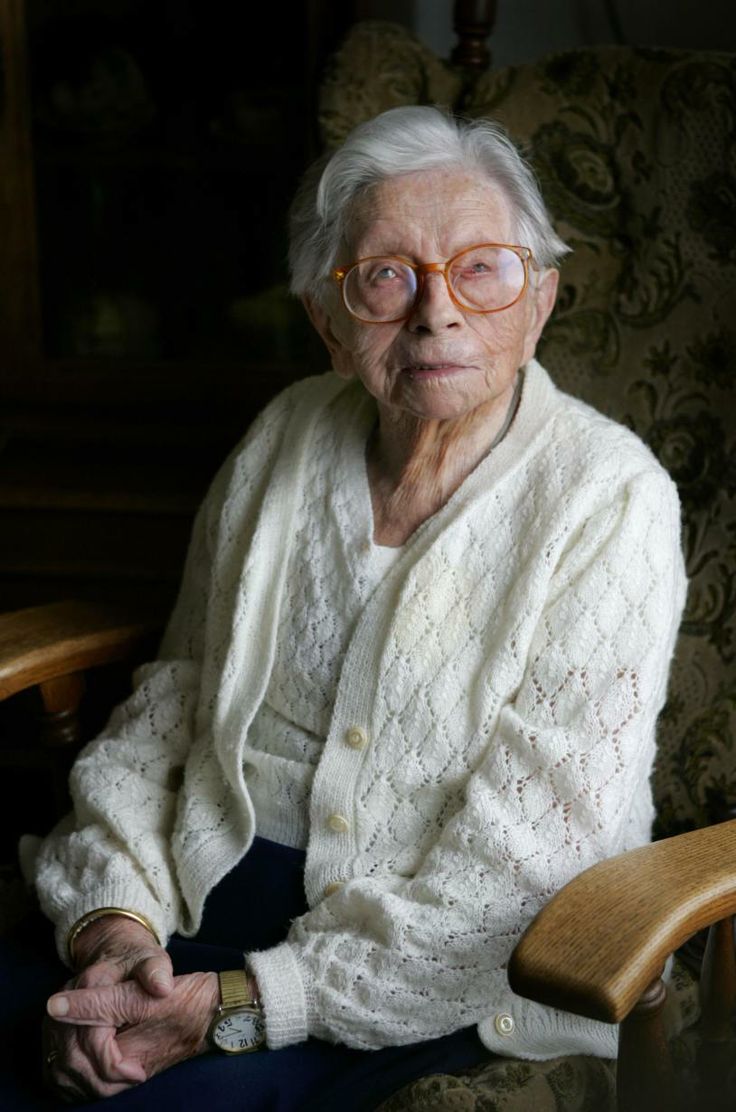
Came across a New Scientist article last week about the findings from an examination of 1a3c0edb231df9331ab48b7a840984b9the blood and tissues of Hendrikje van Andel-Schipper after her death in 2005. Aged 115 at her death, she was at one point the oldest woman in the world. She was also in remarkable health, with excellent cognition until she was close to death, and a circulatory system free of disease.

About two-thirds of the white blood cells remaining in her body at death originated from just two stem cells, implying that most or all of the blood stem cells she started life with had already burned out and died. This suggests that our lifespan might ultimately be limited by the capacity for stem cells to keep replenishing tissues day in day out. If there is a limit to the number of stem cell divisions, they will gradually die out and steadily diminish the body’s capacity to keep regenerating vital tissues and cells, such as blood.

Continue reading

Posted in Other | Tagged , , | Leave a comment

How does the life expectancy of Australian men compare to others?

I was asked by a journalist last week for statistics on trends in life expectancy of Australian men, and in particular, where Australia ranked in the world. So I pulled out our latest life expectancy estimates, published a couple of months ago, and took a look. I also looked at the same rankings from the UN life tables published in World Population Prospects 2012 (released in June 2013). The UN publishes life tables for 5-year periods, such as 2010-2015 (centred on2013), whereas we estimate annual life tables for individual years. The latest year we have released is 2012, but I took our one year projections for 2013 and ranked male life expectancy at birth and age 60 for years 1993 and 2013 to examine changes across two decades.

For life expectancy at birth, Australian men had maintained the same 5th rank in the world across the two decades, with life expectancy in 1993 of 75.2 years and in 2013 of 80.4. The leading countries in 1993 were Iceland, Japan and Sweden whereas by 2013 they had become Switzerland, Iceland and Singapore. Of course, the differences in life expectancy between these countries, measured in a few tenths of a year, are probably within the real uncertainty of these estimates, and not too much can be made of the individual ranking comparisons. For countries where it is older age mortality that is largely determining trends in life expectancy, issues around accuracy of age attribution in death certificates and in population estimates, and the various methods used to construct the final open-ended interval in the life table, mean that there is actually some uncertainty in estimates even for countries with good death registration and census data, and the estimates of difference UN agencies and academic groups may differ in the details.

The more important point to make is that the life expectancy at birth of Australian men has increased at just over 2.5 years per decade over the last two decades, or more dramatically, that is equivalent to a gain of just over 6 hours per day. This is almost identical to the frontier life expectancy trend identified by Oeppen and Vaupel (Science 2002), who plotted the highest observed life expectancy at national level over more than 200 years. The frontier trend is contributed by different countries over time, but it is essentially linear with a 2.5 years per decade slope.

What is happening to life expectancy at older ages for Australian men? After all, that is where the action is now. Australia has gone from 9th rank in 1993 (19.7 years) to first rank in 2013 (23.7), just ahead of Switzerland, Israel and Japan. Not that the differences between these three countries are statistically significant. I guess I can be inspired by the fact that I am an Australian (longest life expectancy in the world at age 60) and living in Switzlerland, currently longest life expectancy at birth in the world.

These dramatic trends for Australia reflect substantial reductions in mortality rates for ages above 60, predominantly for heart disease and stroke, that started around mid-1970s (see graph below) and reflect reductions in smoking and improvements in blood pressure and cholesterol control as well as increasing effectiveness of early treatment for heart attacks and stroke.Aus LE65Of course all these statistics are calculated using cross-sectional mortality rates for each age group observed or projected for the year 2013, and the likely average life expectancies of age cohorts alive today will likely be longer because of continuing declines in mortality rates into the future. Perhaps when I have a moment, I’ll do some comparisons of countries using projected cohort rather than period life expectancies.

Posted in Global health trends, World Health Organization | Tagged , , | Leave a comment

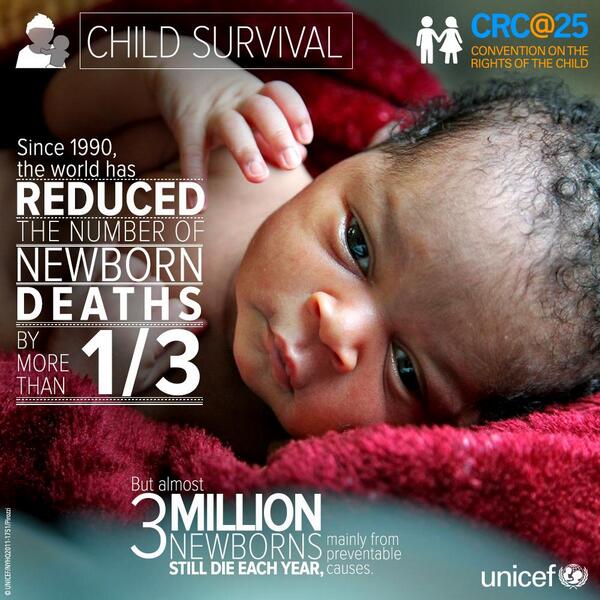
Newborn survival: progress but still too many preventable deaths

Every year, 2·9 million newborn babies die from largely preventable causes, and 2·6 million more are stillborn. The recent Lancet Every Newborn Series paints the clearest picture to date of a newborn’s chance of survival and the steps that must be taken to end preventable newborn deaths and stillbirths. One of the papers summarized recent collaborative work between lead researchers, WHO and other UN agencies on trends in stillbirth and neonatal mortality rates and on causes of neonatal deaths, and proposed new targets for the post-2015 era:

http://www.thelancet.com/journals/lancet/article/PIIS0140-6736%2814%2960496-7/fulltext

Following on from this work, my team recently released detailed estimates of country-level trends in causes of neonatal deaths from 2000 to 2012:

http://www.who.int/gho/child_health/mortality/mortality_causes_region_text/en/BoEynJjIAAACOPL


Posted in Global health trends, World Health Organization | Tagged | Leave a comment

Peak productivity?

Its been a crazy couple of weeks leading up to the 2014 World Health Assembly (just ended). We were involved in the launch of four global reports with a substantial statistical input from us in a period of 8 days. Hope this is the peak of productivity and life becomes a little calmer.

Maternal cover 1990 to 20136 May – Trends in maternal mortality 1990 to 2013. Available at http://www.who.int/reproductivehealth/publications/monitoring/maternal-mortality-2013/en/


Alcohol201412 May – Global status report on alcohol and health 2014. Available at http://www.who.int/substance_abuse/publications/global_alcohol_report/en/


adolescent14 May – Health for the world’s adolescents. Available at http://www.who.int/maternal_child_adolescent/topics/adolescence/second-decade/en/


whs201415 May – World Health Statistics 2014. Available at http://www.who.int/gho/publications/world_health_statistics/en/


Posted in Other, World Health Organization | Tagged , | Leave a comment

My Erdös number drops to 4, I doubt it will go lower.

Chatting to colleagues at work the other day I boasted that my Erdös number had dropped to 5 (see previous post on this), and Dan asked what an Erdös number was. I explained, and he obviously went back to his office to see if he could work out his, because he returned a few minutes later to say that his was 3, and I was 4. This was because he and Josh Salomon had co-authored a paper with Adrian Raftery (Erdös 2), and I have published several papers with Josh. Here is the full path:

1 Erdös, P.; Babu, G. Jogesh; Ramachandra, K. An asymptotic formula in additive number theory.   Acta Arith. 28 (1976) no. 4, 405-412.

2 Mukherjee, S., Feigelson, E.D., Babu, G.J., Murtagh, F., Fraley, C. and Raftery, A.E. Three types of gamma ray bursts. Astrophysical Journal 1998; 508, 314-327.

3 Le Bao, Josh A Salomon, Tim Brown, Adrian E Raftery, Daniel R Hogan. Modelling national HIV/AIDS epidemics: revised approach in the UNAIDS Estimation and Projection Package 2011. Sexually transmitted infections 2012, 88 (Suppl 2), i3-i10.

4 Colin D Mathers, Ritu Sadana, Josh Salomon, Christopher JL Murray, Lopez AD. Healthy life expectancy in 191 countries, 1999. The Lancet 2001, Vol 357: 1685-1691.

And this gives me another path for Einstein number of 6, since Einstein has Erdös number 2 (through Ernst G Strauss). Through Josh, most of my colleagues of the early days in WHO will also have an Erdös number of 4, as will the many hundreds of his co-authors on the recent GBD 2010 papers (Lancet December 2012).  Presumably this has also happened in physics, where the particle physics papers have had huge numbers of authors for decades now.

Posted in Other | Tagged , , | Leave a comment

The world is living longer but still too many premature deaths

whs2014Average global life expectancy has increased by 6 years from 1990 to 2013 and is now 73 years for females and 68 years for males. Our latest statistics report (www.who.int/gho) shows that low-income countries have made the greatest progress, with an average increase in life expectancy by 9 years from 1990 to 2012. There are still many countries with unacceptably high levels of preventable deaths from infectious diseases, maternal and childhood conditions as well as injuries and noncommunicable diseases.

World Health Statistics 2014 contains WHO’s annual compilation of health-related data for its 194 Member States, and includes a summary of the progress made towards achieving the health-related Millennium Development Goals (MDGs) and associated targets. This year, it also includes highlight summaries on the ongoing commitment to end preventable maternal deaths; on the need to act now to combat rising levels of childhood obesity; on recent trends in both life expectancy and premature deaths; and on the crucial role of civil registration and vital statistics systems in national and global advancement.

Worldwide, a major shift is occurring in the causes and ages of death. In 22 countries (all in Africa), 70% or more of years of life lost (due to premature deaths) are still caused by infectious diseases and related conditions. Meanwhile, in 47 countries (mostly high-income), noncommunicable diseases and injuries cause more than 90% of years of life lost. More than 100 countries are transitioning rapidly towards a greater proportion of deaths from noncommunicable diseases and injuries.

Posted in Other | Leave a comment

Maternal mortality rates rising in the USA

We released new estimates for maternal mortality rates last week. See post at

https://colinmathers.com/2014/05/06/latest-estimates-for-global-maternal-mortality-show-accelerating-progress/

The big story is that faster progress is needed and most countries will not achieve the Millenium Development Goal for a 75% reduction between 1990 and 2015. Ten countries account for 60% of global maternal deaths. However, Reuters was more interested in the rising rate in the USA. This may relate to the increasing numbers of births to women at older ages, where there are also more chronic diseases such as diabetes and hypertension.

According to Reuters, WHO death-rates expert Colin Mathers said improved data collection could also affect the figures. “There’s also a situation in the U.S. where there are a considerable proportion of the population without health insurance. That may also be affecting things,” he said. Will have to add “Death-rates expert” to my CV.

Another commentator was more certain about the cause of the rising maternal death rates in the USA: “How the right wing is killing women”

http://www.huffingtonpost.com/robert-reich/maternal-health-care_b_5312184.html

(these comments based on an independent analysis of the data from a US academic group)

Posted in Global health trends, World Health Organization | Tagged , , | Leave a comment

The world is getting smaller – my Erdös and Einstein numbers drop

In an earlier post (https://colinmathers.com/2014/01/26/its-a-small-world-erdos-bacon-and-other-numbers/), I described author paths that gave me an Erdös number of 6 and an Einstein number of 7. The other day I came across a comment that Kenneth Arrow, Nobel Prize Laureate in economics in 1972, has an Erdös number of 3 and remembered that he had published a paper last year with one of my co-authors, Dean Jamison, which would reduce my Erdös number to 5 (the median number for mathematicians). So I looked for the publication path, and first found that Dean and Kenneth Arrow had published several papers over the years.


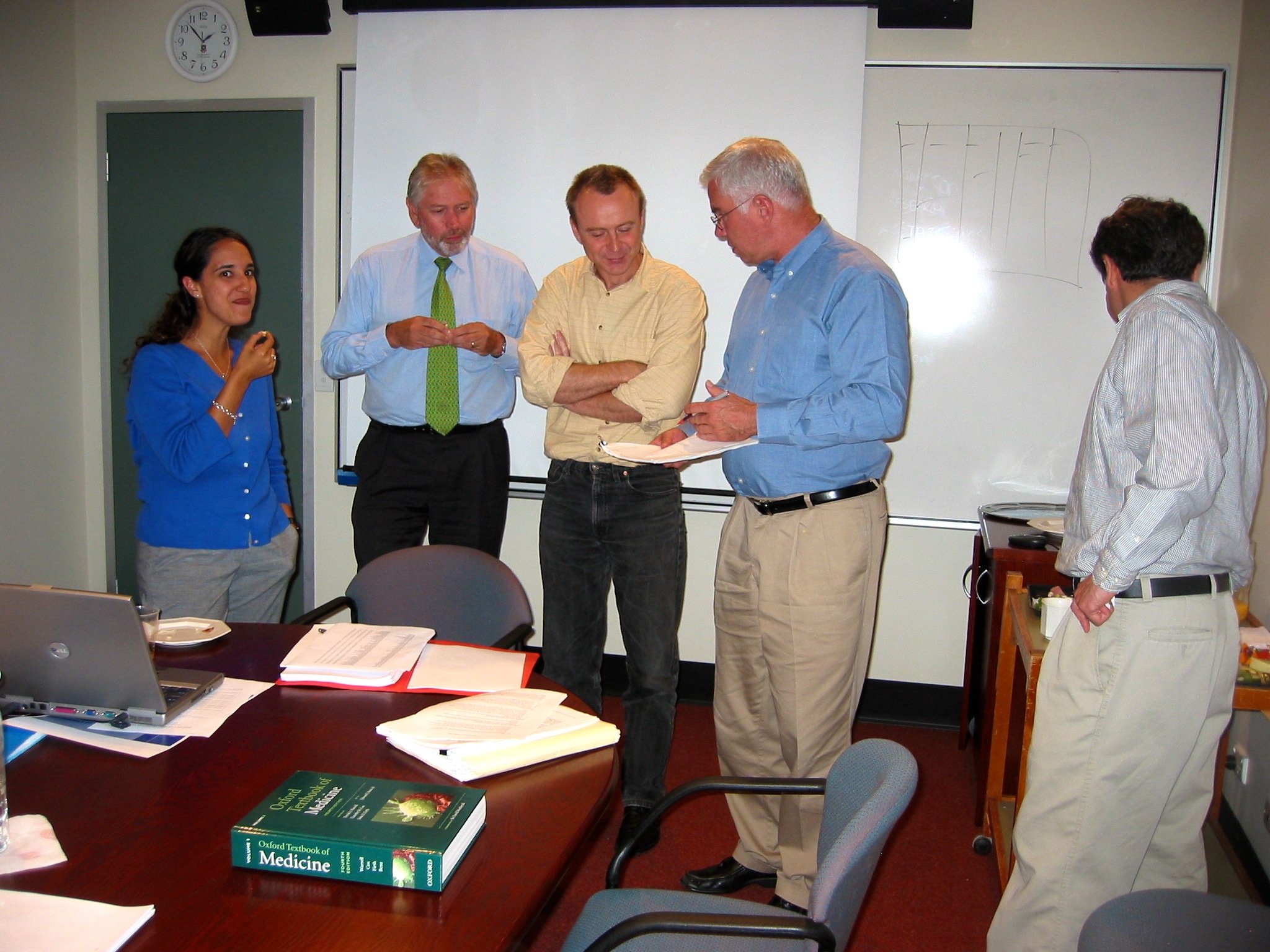
Some of the authors of the Global Burden of Disease volume for the Disease Control Priorities Project. From left: Sonbol Shahid-Solles, Alan Lopez, Steve Begg, Dean Jamison and Majid Ezzati.

Some of the authors of the Global Burden of Disease volume for the Disease Control Priorities Project. From left: Sonbol Shahid-Salles, Alan Lopez, Steve Begg, Dean Jamison and Majid Ezzati.

So much as I would like to think Dean has been working hard on strategies to reduce my Erdös number, in fact it has been at most 5 since 2005. Here is the path:

  1. Paul Erdös, László Lovász; A Simmons, Ernst G Straus. Dissection graphs of planar point sets. A survey of combinatorial theory (Proc. Internat. Sympos., Colorado State Univ., Fort Collins, Colo., 1971), pp. 139–149. North-Holland, Amsterdam, 1973
  2. Kannan, Ravi; László Lovász, Herbert E Scarf. The shapes of polyhedra. Math. Oper. Res. 1990; 15(2): 364–380.
  3. Kenneth J Arrow, Samuel Karlin, Herbert Scarf, et al., Studies in the Mathematical Theory of Inventory and Production. Stanford University Press, 1958; MR 27#1361.
  4. Kenneth J Arrow, Helen Gelband, Dean T Jamison. Making antimalarial agents available in Africa. New England Journal of Medicine. 2005; 353(4): 333-5
  5. Alan D Lopez, Colin D Mathers, Majid Ezzati, Dean T Jamison, Christopher JL Murray. Global and regional burden of disease and risk factors, 2001: systematic analysis of population health data. The Lancet 2006; 367(9524): 1747-1757

Then I realized that because Ernst G Straus was a co-author of Albert Einstein and has Erdös number 1, the same path reduces my Einstein number from 7 to 6:

  1. Albert Einstein, Ernst G. Straus. The Influence of the Expansion of Space on the Gravitation Fields Surrounding the Individual Stars. Annals of Mathematics 1946; 47(4): pp 731-741.

While googling Kenneth Arrow to find his Erdös path I also came across an alternate path to Einstein (Kenneth Arrow, Theodore E Harris, Richard Bellman, Ernst G Straus, Albert Einstein) which also gives me an Einstein number of 6. Since Einstein published close to 100 years ago and had few co-authors, that’s quite low. In contrast, Erdös was publishing recently, was the most prolific mathematics paper writers of all time, and had many co-authors.

Posted in Other | Tagged , , | Leave a comment