Latest estimates for global maternal mortality show accelerating progress

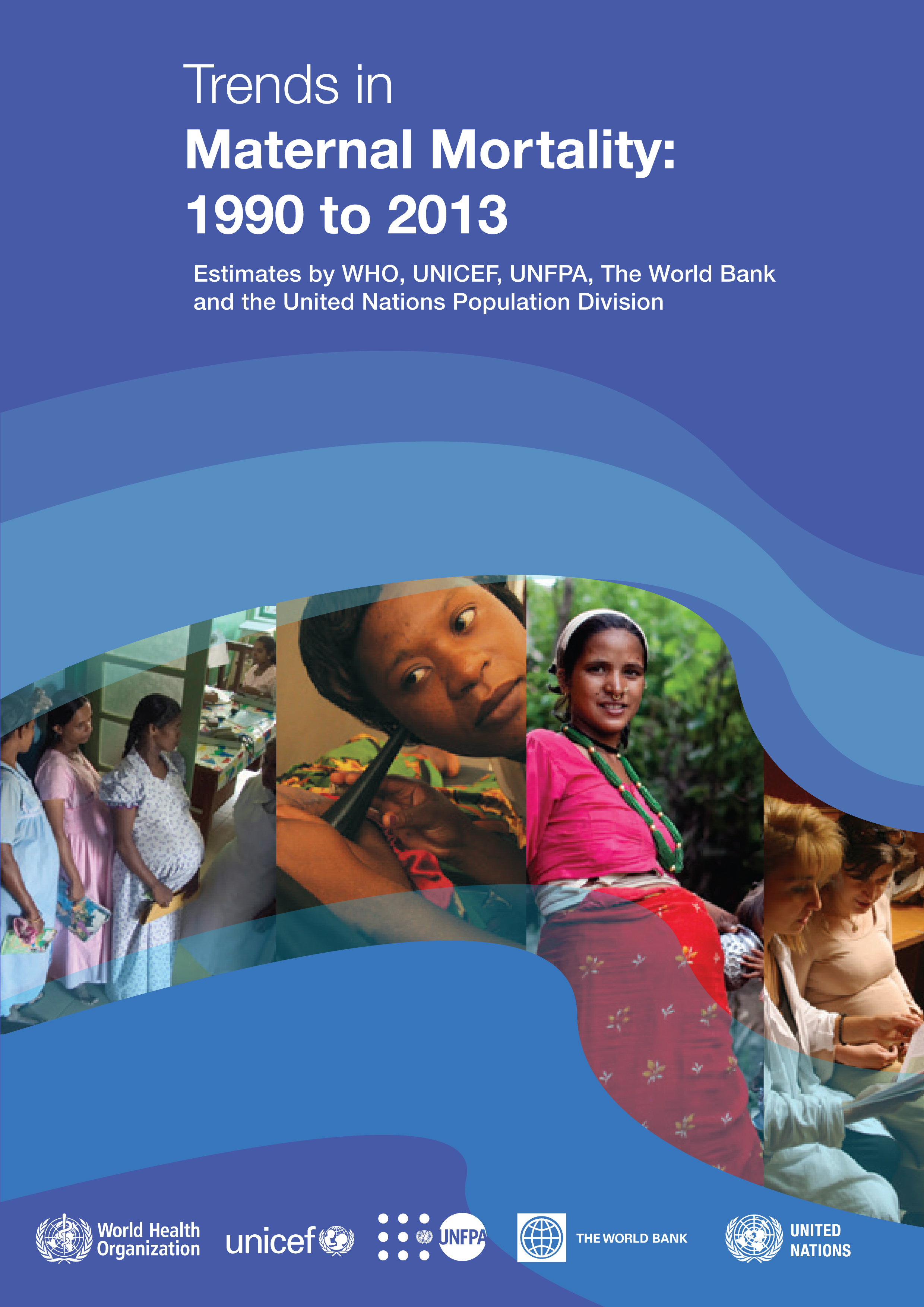
Maternal cover 1990 to 2013I was just down at the Palais de Nations for a press conference to release our latest estimates of maternal mortality progress. A collaborative effort with other UN Agencies and academic groups that has taken quite a lot of time and effort, as well as considerable interactions with countries about the data and results. The new estimates show a 45% reduction in maternal deaths since 1990. An estimated 289,000 women died in 2013 due to complications of pregnancy and childbirth, down from 523,000 in 1990. The rate of progress appears to have accelerated in the last decade, but death rates remain very high in many African countries. Ten countries account for 60% of global maternal deaths.

http://www.who.int/reproductivehealth/publications/monitoring/maternal-mortality-2013/en/


Posted in Global health trends, World Health Organization | 1 Comment

Reducing six modifiable risk factors could prevent 37 million deaths from chronic diseases over 15 years.

Reducing or curbing just six modifiable risk factors—tobacco use, harmful alcohol use, salt intake, high blood pressure and blood sugar, and obesity—to globally-agreed target levels could prevent more than 37 million premature deaths over 15 years, from the four main non-communicable diseases (NCDs; cardiovascular diseases, chronic respiratory disease, cancers, and diabetes) according to new research published by the Lancet today.

Vasilis Kontis, Colin D Mathers, Jürgen Rehm, Gretchen A Stevens, Kevin D Shield, Ruth Bonita, Leanne M Riley, Vladimir Poznyak, Robert Beaglehole, Majid Ezzati. Contribution of six risk factors to achieving the 25×25 non-communicable disease mortality reduction target: a modelling study. The Lancet, 2014; DOI: 10.1016/S0140-6736(14)60616-4
 

Vasilis started with my “business-as-usual” projections of deaths by cause for all countries of the world, and implemented a quite complex set of models (which the other authors also had a lot to do with!) to estimate the additional deaths avertable by reaching the six risk factor targets for 2025 agreed by the World Health Assembly in 2013. Thanks must go to Majid for steering the whole project on a rapid time frame.

ScienceDaily also has a summary of the results:

http://www.sciencedaily.com/releases/2014/05/140502204723.htm

Posted in Global health trends, Projections, Publications | Leave a comment

Global trends and projections for causes of death: implications for longevity

Longevity+Conference_3792Since 1990, global life expectancy has increased 3 years per decade. Life expectancy at older ages for both sexes has also increased, particularly since 1970, in many developed countries. This trend is most striking in data from my own country Australia. See slide below.

In contrast, life expectancy has stagnated or reversed for periods in some regions. For example, while life expectancy for men aged 60 in high income countries has increased recently at an average of 1.63 years per decade, the rate in former Soviet countries has been much lower at 0.22 years per decade.

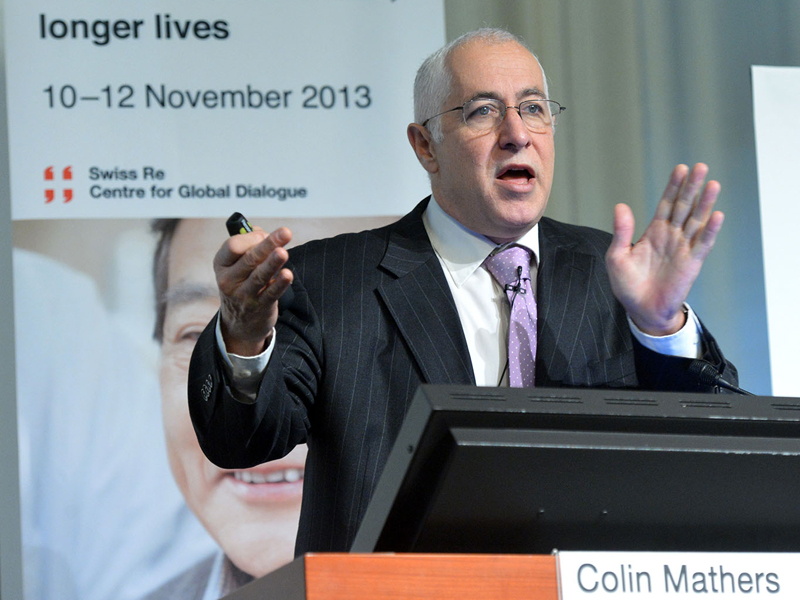
Longevity+Conference_25841In my talk at the Swiss Re conference The Future of Human Longevity (Zurich, Nov 2013) I summarized recent work to examine evidence for compression of mortality. I found no evidence of this, suggesting that we seem to be quite a long way from biological limits to life span at the population level, and that global increases in life expectancy are likely to continue.

A video of my talk can be found at the link below.

http://cgd.swissre.com/library/Colin_Mathers_-_The_future_of_human_longevity_cardiovascular_health_longer_lives.html


Posted in Global health trends, Projections | Leave a comment

Road deaths in developing countries projected to nearly double by 2030

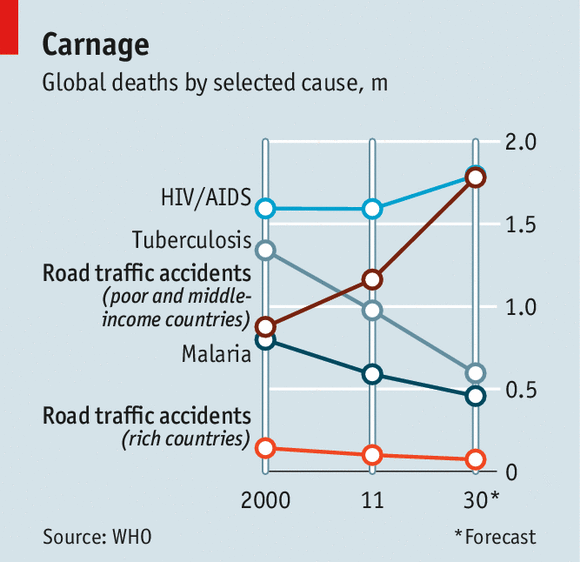
WHO estimates that the number of deaths globally will reach nearly 2m a year by 2030, up from 1.3m now, according to estimates and projections I prepared for the Global Status Report on Road Safety 2013 with the Violence and Injury Prevention Department (http://www.who.int/violence_injury_prevention/road_safety_status/2013/en/index.html).

20140125_IRC184Rich countries are making roads safer and cutting casualties to rates not seen for decades, despite higher car use. Poor and middle-income ones will see crashes match HIV/AIDS as a cause of death by 2030. In the very poorest, deaths are projected almost to triple. The Economist wrote a nice story on this in a recent issue:

http://www.economist.com/news/international/21595031-rich-countries-have-cut-deaths-and-injuries-caused-crashes-toll-growing

Posted in Global health trends, Projections, World Health Organization | Leave a comment

H-index and age: a new criterion for success?

The H-index is a measure of scientific research output defined as the number h of publications that have been cited h times or more ( http://en.wikipedia.org/wiki/H-index). Thus an H-index of 10 indicates that 10 publications have been cited 10 times or more. The index is designed to improve upon simpler measures such as the total number of citations or publications to give a measure of both productivity and impact of published work. The index works properly only for comparing scientists working in the same field; citation conventions differ widely among different fields.

My total citations per year

My total citations per year

Google Scholar provides an estimate of the H-index as part of my Google Scholar Profile (http://scholar.google.ch/citations?user=qlhV1WcAAAAJ&hl=en).  This is calculated by a computer program and may not be entirely accurate, you need at minimum to check that Google Scholar is correctly identifying your publications and not missing some or including works that are not yours.

The H-index increases with years of active publication and there have been proposals to adjust it by dividing by career-years to give a more comparative measure across researchers of different ages. However, its not always simple to define career-years, particularly for people who have had periods in and out of active research.

A few years ago, I noticed that my H-index was a not far off my age, and took some interest in watching to see whether it could overtake my age. Which it did about a year and half ago. My H-index is now 67 as at the time of this post, and in total my publications have received 44,003 citations.  So maybe the new benchmark for H-index is to exceed your age.

JE Hirsch, the author of the h index estimated that after 20 years a “successful scientist” will have an h-index of 20, an “outstanding scientist” an h-index of 40, and a “truly unique” individual an h-index of 60a. However, he pointed out that values of h will vary between different fields. Well, I do appreciate confirmation that I am a truly unique individual, but suspect that apart from Google Scholar possibly estimating H on the high side, I am in a field (producing global health statistics) which by its nature will generate lots of citations. Helped along by the medical academics always wanting to provide a global context or a projection in the introductory paragraph of their paper on a particular disease.

Posted in Other | Tagged , | 3 Comments

Global cancer cases and deaths

In mid-December, IARC released latest estimates of incidence and mortality for 28 types of cancer in 184 countries in GLOBOCAN 2012 v1.0, Cancer Incidence and Mortality Worldwide. (Ferlay, Soerjomataram, Ervik, Dikshit, Eser, Mathers, Rebelo, Parkin, Forman and Bray).

1525360_10152142036519661_680563121_nAccording to GLOBOCAN 2012, an estimated 14.1 million new cancer cases and 8.2 million cancer-related deaths occurred in 2012, compared with 12.7 million and 7.6 million, respectively, in 2008. The most commonly diagnosed cancers worldwide were lung (1.8 million, 13.0% of the total), breast (1.7 million, 11.9%), and colorectum (1.4 million, 9.7%). The most common causes of cancer death were cancers of the lung (1.6 million, 19.4% of the total), liver (0.8 million, 9.1%), and stomach (0.7 million, 8.8%).

There has been a sharp rise in breast cancer worldwide. In 2012, 1.7 million women were diagnosed with breast cancer, up 20% from 2008. Breast cancer is also the most common cause of cancer death among women (522 000 deaths in 2012). Cervical cancer death rates are 10 times higher in Africa than in North America, mainly because of lack of screening.

The GLOBOCAN 2012 online database is available at www.globocan.iarc.fr

Posted in Global health trends, Publications, World Health Organization | Leave a comment

Its a small world – Erdös, Bacon and other numbers

Paul Erdos (1913-1996)

Paul Erdos (1913-1996)

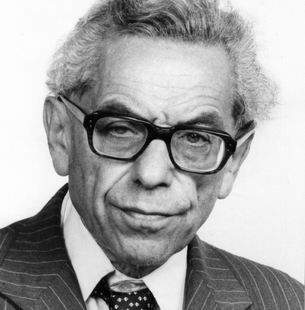
Just for fun, mathematicians like to quote their degrees of published separation from Paul Erdös, one of the most prolific modern writers of mathematical papers (http://en.wikipedia.org/wiki/Erd%C5%91s_number). So one day when I needed a break from work, I thought I would find out if I had a finite Erdös number. I found one set of paths through Gary King and another set through Robert May (Baron May of Oxford to you peasants): both giving me an Erdös number of 6.

An Erdös Path for Colin Mathers

  1. Persi Diaconis and Paul Erdös, On the distribution of the greatest common divisor. A festschrift for Herman Rubin, 56–61, IMS Lecture Notes Monogr. Ser., 45, Inst. Math. Statist., Beachwood, OH, 2004.
  2. Persi Diaconis, Susan Holmes, Radford M. Neal, Analysis of a nonreversible Markov chain sampler. Ann. Appl. Probab. (2000), 10(3): 726–752.
  3. Robert E. Kass, Bradley P. Carlin, Andrew Gelman, and Radford M. Neal, Markov chain Monte Carlo in practice: a roundtable discussion. American Statistician (1998)   52: 93-100.
  4. Andrew Gelman, Gary King, and Chuanhai Liu. Not asked and not answered: multiple imputation for multiple surveys. Journal of the American Statistical Association (1998) 93: 846-874
  5. Gary King, Christopher J.L. Murray, Joshua A. Salomon and Ajay Tandon. Enhancing the Validity and Cross-Cultural Comparability of Measurement in Survey Research. American Political Science Review (2003), 97: 567-583.
  6. Lopez AD, Mathers CD, Ezzati M, Jamison DT, Murray CJL. Global and regional burden of disease and risk factors, 2001: systematic analysis of population health data. The Lancet (2006) 367(9524):1747-57.

Another Erdös Path for Colin Mathers

  1. P. Erdös, and J. Galambos, Asymptotic distribution of normalized arithmetical functions, Proceedings of the American Mathematical Society 46 (1974), 1-8.
  2. J. Galambos, E. Seneta, Regularly varying sequences. Proceedings of the American Mathematical Society 41 (1): 110–116
  3. Cohen JE, Iwasa Y, Rautu Gh, Ruskai MB, Seneta E, Zbaganu Gh. Relative entropy under mappings by stochastic matrices, Linear Algebra and its Applications, 179 (1993), 211–235.
  4. Franziska Michor, Steven A. Frank, ,Robert M. May Yoh Iwasa and Martin A. Nowak, Somatic selection for and against cancer. Journal of Theoretical Biology (2003) 225(3):377-382
  5. Neil F. Cramer and Robert M. May, Energy loss of fast test ions in a plasma in a weak magnetic field, Physics Letters A (1969) 30(1): 10-11.
  6. Colin D. Mathers and Neil F. Cramer, The Effect of Ionization and Recombination on the Resistivity of a Partially Ionized Plasma in a Magnetic Field.  Australian Journal of Physics 31: 171-9 (1978).

From my brief career as a physicist, I also have an Einstein number of 7 via Baron May of Oxford. Unlike Erdös, Einstein published very few papers with collaborators, and also most of his publications were around 70-100 years ago, so I think an Einstein number of 7 is quite respectable for someone who was only briefly a physicist.

  1. Albert Einstein and Wolfgang Pauli, Non-existence of regular stationary solutions of relativistic field equations, Annals of Mathematics, ser. 2, 44 (1943) 131-137.
  2. Wolfgang Pauli, L Rosenfeld and Victor F. Weisskopff . Niels Bohr and the development of physics. New York: Pergamon Press (1955) – 195 pp.
  3. John M Blatt, Victor F Weisskopf. . Theoretical nuclear physics. New York: Chapman and Hall (1952) – 896pp.
  4. JM Blatt, Stuart T Butler. Superfluidity of an ideal Bose-Einstein gas. Physics Review (1955) 100: 476-480.
  5. Stuart T Butler, Robert M May. Production of Highly Excited Neutral Atoms for Injection into Plasma Devices. Physics Review (1965) 137: A10–A16
  6. Robert M May, Neil F Cramer. Energy loss of fast test ions in a plasma in a weak magnetic field. Pgysics Letters A (1969), 30: 10-11.
  7. Colin D Mathers, Neil F Cramer.  The Effect of Ionization and Recombination on the Resistivity of a Partially Ionized Plasma in a Magnetic Field.  Australian Journal of Physics  (1978) 31: 171-9.

And one I won’t be adding to my CV: I have 2 degrees of (handshake) separation from Adolf Hitler. Back in 2003, I shook hands with a woman who had shaken hands with Hitler.

Kevin Bacon

Kevin Bacon

But I pine for a finite Erdös-Bacon number (= Erdös number + (Kevin) Bacon number). That means I have to get a part in any film with a real actor in it who has a finite Bacon number.  My friend James has a Bacon number of 3, and he just needs to offer me a part in his next film!

Incidentally, four of the lead actors in the film James was in have Bacon numbers of 2, and the other 3. Apparently, among professional actors the mean Bacon number is 2.871 with standard deviation 0.66 and it is essentially impossible to find an actor with a Bacon number of more than 4. In contrast, among mathematicians, the median Erdos number is 5 and the mean is 4.65.

Most scientists don’t have a Bacon number, though many will have an Erdos number. Several scientists have the lowest known Erdos-Bacon number of 3, as does a baseball player, Hank Aaron, if you count autographing the same baseball as Erdos as giving him an Erdos number of 1. Natalie Portman has an Erdos-Bacon number of 6, second-lowest among professional actors.

Posted in Other | 1 Comment

World Health Statistics

WHS2013_cover_EN_02bWorld Health Statistics is the flagship statistical publication of the World Health Organization released annually in May at the time of the World Health Assembly. Compiled by my Unit, it is the definitive source of information on the health of the world’s people. The latest edition, World Health Statistics 2013, is available online at www.who.int/gho

Did you know:

  • Every day, about 800 women die due to complications of pregnancy and childbirth.
  • In some countries, less than 10% of women who want to prevent pregnancy have access to any contraceptive methods.
  • Children in low-income countries are 16 times more likely to die before reaching the age of five, than children in high-income countries.
  • China now has a higher life expectancy at birth than 7 of 10 countries in eastern Europe.
  • Almost half of all countries surveyed have access to less than half the essential medicines they need for basic health care in the public sector

WHO | World Health Statistics 2013

Posted in Global health trends, World Health Organization | Tagged , | Leave a comment